Season: mid-March → late November

The 6 best kitesurfing spots in the Indian Ocean

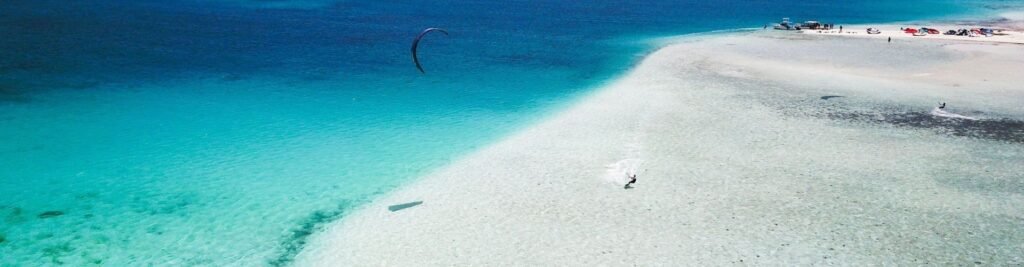
The Indian Ocean is home to some of the world’s best kitesurfing spots, with consistent wind conditions, sheltered lagoons and warm water all year round. From Madagascar to Mauritius, via Rodrigues, Zanzibar and the Seychelles, each destination offers a unique kitesurfing experience.
But one spot stands out from the rest: Sakalava Bay, in Diego Suarez, in northern Madagascar. With 98 per cent of days suitable for kitesurfing during the season and a powerful thermal wind (the Varatraza), it is the ideal playground for kitesurfers of all levels.
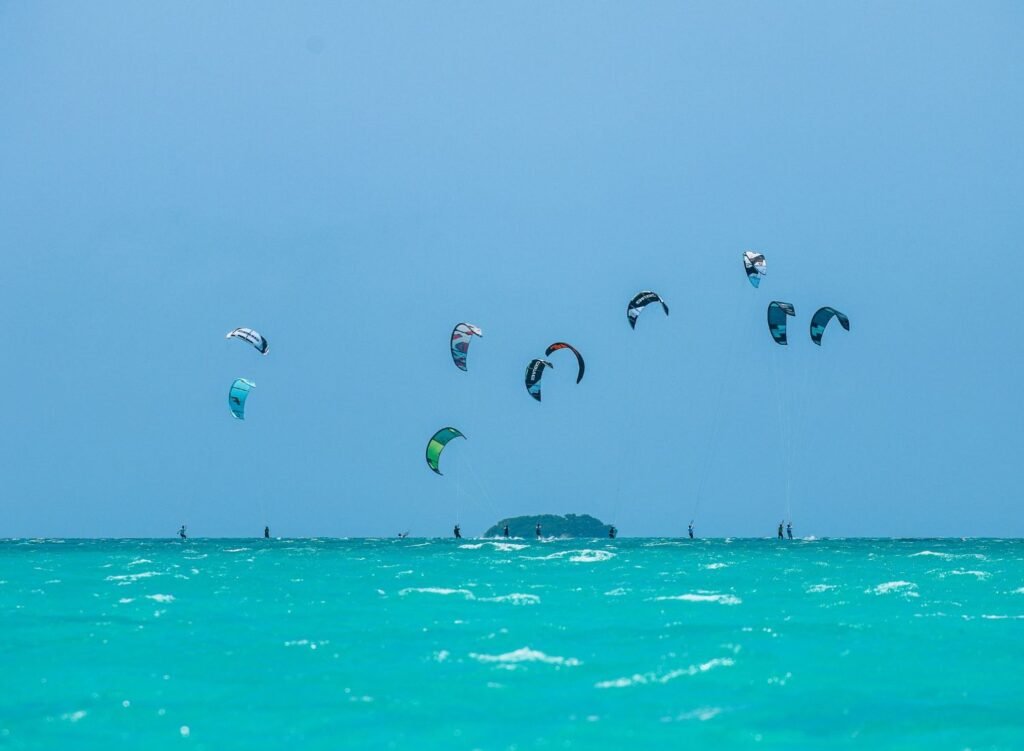
In this guide, you’ll discover the 6 best kitesurfing spots in the Indian Ocean, their conditions, the best time to visit and the specific reasons for choosing each one.
In Summary:
- Sakalava Bay (Madagascar) offers 98% rideable days from mid-March to the end of November thanks to the Varatraza.
- Le Morne (Mauritius) is the most renowned spot in the Indian Ocean, with trade winds of 18 to 25 knots from May to November.
- Rodrigues charms visitors with its vast, uncrowded lagoon and a wind season running from April to December.
- Paje (Zanzibar) offers a flat, reef-protected stretch of water, ideal for beginners.
- The Seychelles and Réunion round off the selection with shorter wind windows but exceptional settings.
- The best overall time for kitesurfing in the Indian Ocean is from May to October.
The best kitesurfing spots in the Indian Ocean
1. Sakalava Bay, Madagascar: the number one spot
Located 25 km from Diego Suarez, in northern Madagascar, Sakalava Bay is regarded as one of the best kitesurfing spots in the world. Its main attraction is the Varatraza, a south-easterly thermal wind that blows from mid-March to the end of November with exceptional consistency.
Riding conditions
|
Criterion
|
Details
|
|---|---|
|
Season
|
Mid-March to late November
|
|
Wind
|
Varatraza, 15 to 35 knots depending on the season
|
|
Rideable days
|
98% during the season
|
|
Water
|
24 to 28 °C, flat in the lagoon
|
|
Level
|
Beginner to expert
|
The bay has a shallow, sheltered lagoon, perfect for beginners, and waves on the reef for experienced riders. The water remains navigable almost every day of the season.
Why choose Sakalava?
Sakalava Bay combines several rare advantages in a single spot: reliable wind for over eight months, warm, calm waters, and an unspoilt setting far from mass tourism.
- The Ocean Lodge, an eco-lodge situated right on the beach, offers a certified kitesurfing school with IKO-qualified instructors, equipment hire and all-inclusive holiday packages to suit all budgets.
The lodge welcomes everyone from complete beginners to experienced kitesurfers looking for a reliable and affordable spot. Compared to Mauritius or the Seychelles, the cost of living in Madagascar is significantly lower, making it a particularly attractive destination for a long-term kitesurfing holiday.
2. Mauritius: the legendary kitesurfing spot
Mauritius is undoubtedly the best-known kitesurfing destination in the Indian Ocean. The south-easterly trade winds blow from May to November, generally at between 18 and 25 knots, with water temperatures ranging from 23 to 28 °C (source: Figaro Nautisme).
Le Morne: the global benchmark
Situated in the south-west of the island, at the foot of Morne Brabant – a UNESCO World Heritage Site – this spot offers a vast, flat lagoon for freeriding and waves beyond the reef for experienced riders.
The shallow ‘Kite Lagoon’ is suitable for beginners, whilst the La Pointe area offers more challenging choppy conditions.
Anse La Raie and the east coast
In the north of the island, Anse La Raie boasts three distinct areas of water: a flat basin for freestyle, an offshore wave zone and a large, shallow area for beginners. Less crowded than Le Morne, this spot will appeal to riders seeking peace and quiet.
On the east coast, Palmar and Belle Mare offer a steady side-on wind and a shallow lagoon.
- The downside: Mauritius remains an expensive destination (accommodation, food and drink, kitesurfing schools) compared to Madagascar or Zanzibar.
3. Rodrigues: the riders’ secret lagoon
Mauritius’s ‘little sister’, Rodrigues Island, is still relatively unknown to the general public. Yet it is an exceptional kitesurfing spot, boasting one of the largest lagoons in the Indian Ocean.
Anse Mourouk: the main spot
Located in the south of the island, Anse Mourouk enjoys a side-onshore wind averaging around 20 knots from April to December. The water is mainly flat with a few reef breaks further out, making it suitable for both freeride and freestyle (source: Tropicalement Vôtre).
Rodrigues has hosted an international kitesurfing festival at Anse Mourouk since 2013, and added wingfoiling for the first time in 2026, proof of the destination’s rising profile in the world of kitesurfing (source: Voyages Afriq).
- Highlights: uncrowded spot, unspoilt wilderness, moderate cost of living. Access is by flight from Mauritius (1 hour 30 minutes).
4. Zanzibar: kitesurfing and turquoise waters
Zanzibar, off the coast of Tanzania, combines picture-postcard scenery with accessible kitesurfing conditions. The main spot is in Paje, on the island’s south-east coast, about an hour from Stone Town.
Paje: the top spot
Protected by a coral reef, Paje Lagoon offers a flat, turquoise stretch of water where you can stand in shallow water almost everywhere at low tide. It is a spot particularly well-suited to beginners and intermediate riders. Experienced kitesurfers will find waves out on the outer reef (source: Tropicalement Vôtre).
There are two wind seasons: the Kusi (June to October, south-easterly winds, 15 to 25 knots) and the Kaskazi (December to February, north-easterly winds, more irregular). The best time to visit is from June to September.
- Highlights: a relaxed atmosphere, plenty of local schools, and good value for money. The main drawback: high tides can significantly reduce the navigable area.
5. Seychelles: kitesurfing amongst granite outcrops and lagoons
The Seychelles aren’t the first destination that springs to mind for kitesurfing, but the archipelago offers some great sessions for experienced riders. The south-easterly trade winds blow from May to October, with gusts of between 15 and 22 knots.
The best spots are concentrated on Mahé (Anse à la Mouche, Anse à la Mouche) and Praslin. The water is crystal-clear and warm (27 to 30 °C), but the navigable areas are more limited than in Mauritius or Madagascar. The wind can also be unpredictable at the start and end of the season.
- Highlights: spectacular scenery, crystal-clear water, and the chance to combine kitesurfing with sailing. The main drawback: high costs (the Seychelles are among the most expensive destinations in the Indian Ocean) and less reliable wind conditions than at Sakalava or Le Morne.
6. Réunion: challenging sessions for experienced riders
Réunion is not a typical kitesurfing spot: this volcanic island offers more technical conditions and an ocean environment that is mainly suited to experienced riders.
The top spots are on the west coast: L’Étang-Salé and Saint-Leu offer open-sea sessions with waves and currents. The trade winds blow from June to October, at between 15 and 20 knots, but the wind windows are less regular than in Mauritius or Madagascar (source: Sport Découverte).
- Strengths: proximity to mainland France (direct flights from Paris), European-standard facilities, and the option to combine a trip with Mauritius. The main drawback: no sheltered lagoon for beginners, and less consistent wind.
A comparison of kitesurfing spots in the Indian Ocean
|
Spot
|
Season
|
Wind
|
Level
|
Budget
|
Key strengths
|
|---|---|---|---|---|---|
|
Sakalava Bay (Madagascar)
|
Mid-March – end of November
|
15–30 knots
|
All levels
|
Accessible
|
98 % rideable days, flat lagoon, certified school
|
|
Le Morne (Mauritius)
|
May – November
|
18–25 knots
|
All levels
|
High
|
A legendary spot, with a lagoon and waves, and a large community
|
|
Anse Mourouk (Rodrigues)
|
April – December
|
~20 knots
|
All levels
|
Moderate
|
A vast, uncrowded lagoon in unspoilt surroundings
|
|
Paje (Zanzibar)
|
June – October
|
15–25 knots
|
Beginner to intermediate
|
Moderate
|
Flat lagoon, relaxed atmosphere, plenty of schools
|
|
Mahé (Seychelles)
|
May – October
|
15–22 knots
|
Intermediate to expert
|
Very high
|
A stunning setting, crystal-clear waters
|
|
L’Étang-Salé (Réunion)
|
June – October
|
15–20 knots
|
Advanced
|
Moderate
|
Direct flight from Paris, open sea
|
Sakalava Bay stands out for its exceptionally consistent winds and some of the lowest accommodation costs in the Indian Ocean, making it a particularly suitable destination for a first kitesurfing trip or a long-term stay.
When is the best time to go kitesurfing in the Indian Ocean?
The ideal time for most kitesurfing spots is between May and October, when the south-easterly trade winds are at their most consistent. But each destination has its own schedule:
- Mid-March to late November: Sakalava Bay (Madagascar), the longest season in the Indian Ocean.
- April to December: Rodrigues.
- May to November: Mauritius (Le Morne, Anse La Raie).
- June to October: Zanzibar, Seychelles, Réunion.
To maximise your chances of getting out on the water, aim for June, July and August: this is when all the spots in the Indian Ocean enjoy optimal conditions at the same time.
To avoid the crowds, choose mid-March to April or November in Madagascar: the Varatraza is already blowing well and the spot is quieter.
For detailed information on the best times to visit Madagascar: when to go kitesurfing in Madagascar.
FAQ: Kitesurfing in the Indian Ocean
What is the best kitesurfing spot in the Indian Ocean?
Sakalava Bay, in Madagascar, is considered the most reliable spot in the Indian Ocean, with 98% of rideable days during the season. Le Morne, in Mauritius, is best known for its lagoon and its kitesurfing community.
When is the best time to go kitesurfing in the Indian Ocean?
The best time to visit is between May and October, when the south-easterly trade winds blow across the whole region. In Madagascar, the season runs from mid-March to the end of November.
Is it possible to take up kitesurfing in the Indian Ocean?
Yes, there are several spots that are suitable for beginners: Sakalava (Madagascar), Paje (Zanzibar), and Le Morne (Mauritius) all have shallow lagoons and certified schools. The Ocean Lodge offers lessons with IKO-certified instructors for all skill levels.
How much does a kitesurfing trip to the Indian Ocean cost?
The cost varies greatly depending on the destination: Madagascar and Zanzibar remain the most affordable (including lodging, meals, and lessons), while Mauritius and, especially, the Seychelles require a significantly higher budget. Check out Ocean Lodge’s package rates for a concrete example.
Do you need a visa to go kitesurfing in Madagascar?
Yes, a visa is required to enter Madagascar. As of February 16, 2026, the visa costs at least €30 and must be applied for online at the official website evisamada-mg.com (source: eVisamada). For more details: Travelling from the UK to Madagascar.
hy choose Sakalava?
At Ocean Lodge, the day doesn’t end when you leave the water: great food with a resident pastry chef, a downwind in the Emerald Sea for independent riders, and the option to combine your stay with Hôtel Lakana in Ramena. The lodge is 40–45 minutes from Diego Suarez airport.. The lodge is 40–45 minutes from Diego Suarez airport.
Contact
Are you planning a kitesurfing trip to Madagascar?
Message us on WhatsApp or by email with your dates and your level.

Thierry Surdez
Thierry, a Swiss national and founder of Ocean Lodge, is a Swiss federally certified instructor who has always been passionate about water sports. He enjoys sailing, windsurfing, kitesurfing and wingfoiling, and set up Ocean Lodge in 2018 with a simple idea: to offer well-organised, personalised and relaxed kitesurfing holidays in the exceptional setting of Sakalava Bay.